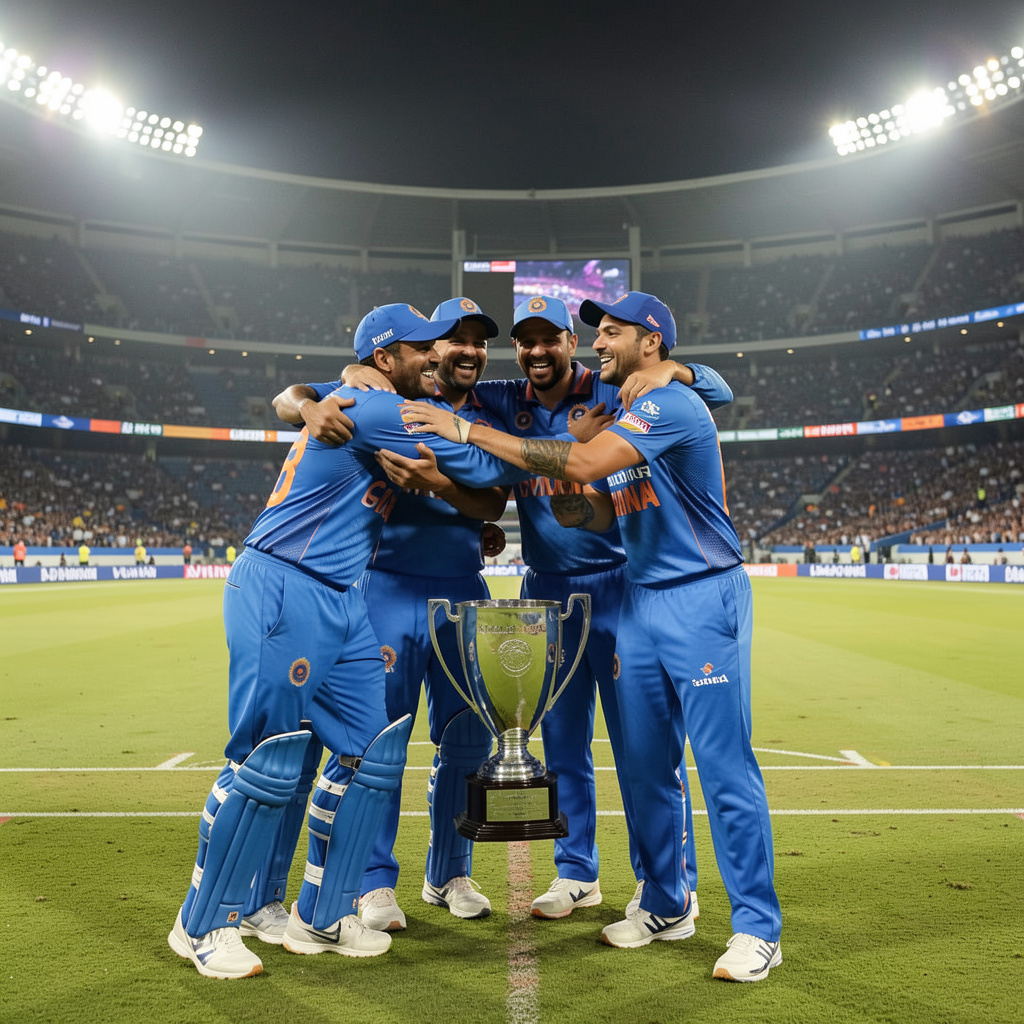
India-England rivalry is one of history, passion, and unforgettable moments that has endured for over 150 years – from test match attrition to T20 action and beyond! This incredible saga continues to flourish today!
One of the most notable moments was Kapil Dev’s semi-final win at the 1983 World Cup that shatter England’s untouchability and established India as an influential nation.
For fans and historians alike, India National Cricket Team vs England Cricket Team timeline captures every milestone, turning point, and legendary performance that has shaped this storied rivalry over generations.
| Match | Format | Date / Series | Result / Scorecard |
|---|---|---|---|
| Latest — 2nd ODI (India vs England) | ODI | Feb 9, 2025 — England tour of India | ENG 304 all out (49.5)IND 308/6 (44.3)India won by 4 wickets (NDTV Sports) |
| 1st ODI (India vs England) | ODI | Feb 6, 2025 — England tour of India | India beat England by 4 wickets (Shubman Gill 87) (NDTV Sports) |
| 3rd ODI (India vs England) | ODI | Feb 12, 2025 — England tour of India | India won by 142 runs (Gill 112, Iyer 78, Kohli 52) (NDTV Sports) |
| 4th T20I (India vs England) | T20I | Jan 31, 2025 — England tour of India | India 181-9 (19.6 overs); England 166 (19.4 overs)India won by 15 runs (Reddit) |
| 5th T20I (India vs England) | T20I | Feb 2, 2025 — England tour of India | India 247-9 (19.6); England 97 (10.3)India won by 150 runs (Reddit) |
| 3rd T20I (India vs England) | T20I | Jan 28, 2025 — England tour of India | England 171-9 (19.6); India 145-9 (19.6)England won by 26 runs (Reddit) |
| 1st T20I (India vs England) | T20I | Jan 22, 2025 — England tour of India | India 133/3 (12.5); England 132 (19.6)India won by 7 wickets (Reddit) |
Latest Match Scorecard (Detailed – 2nd ODI)
| Team / Innings | Runs / Wickets | Overs | Key Performances |
|---|---|---|---|
| England Innings | 304 / 10 | 49.5 | Ben Duckett 65, Joe Root 69 (NDTV Sports) |
| India Innings | 308 / 6 | 44.3 | Rohit Sharma 119 (MoM) (NDTV Sports) |
| Result | India won by 4 wickets | Rohit Sharma Player of the Match (NDTV Sports) |
1932
On a warm morning in June 1932, 24,000 spectators filled Lord’s for what would become more than a cricket match: it would also mark India’s coming of age on an international stage, freed from colonial control by Mahatma Gandhi’s Civil Disobedience Movement and ready to assert its identity through civil disobedience.
The Indian touring party was an impressive collection of talent drawn from many communities under the colonial quota system that ensured representation for Hindus, Muslims and Sikhs. Although Duleep Sinhji and Nawab of Pataudi weren’t available for selection, their team still managed to impress England with its aggressive strokeplay.
Indian cricket’s future was defined by its bowlers. Mohammad Nissar of Punjab had genuine express pace that many likened to Harold Larwood; Amar Singh from Delhi would go on to become one of Wisden’s Five Cricketers of the Year in 1933.
Although India suffered a heavy defeat, their performance exceeded expectations and earned international respect. Their courage and commitment helped pave the way for future tours to England as well as India’s inaugural home Test series in 1952. Nayudu’s aggressive strokeplay would eventually give rise to Merchant, Gavaskar and Tendulkar, while Nissar Singh and Amar Singh’s bowling tradition eventually birthed both legendary spin quartets and modern pace batteries led by Jasprit Bumrah. In today’s digital era, discussions around sports coverage and promotion — including strategies such as casino backlinks — have also become part of the broader cricketing conversation.
As the series moved to Manchester, back injuries forced out Maharaja of Porbandar and gave captaincy to Cottari Kanakaiya Nayudu – an all-rounder who had already scored the first Indian century of this tour and showcased both physical strength and mental resilience – an apt choice.
1975
India’s victory at Lord’s in 1975 is widely recognized as the turning point in Indian cricket history. Kapil Dev’s team triumphed despite all odds and reignited hopes of glory across India – but there was also a dark side. After their win came widespread disappointment.
One thing is one thing, but being humbled in defeat is quite another matter. England saw every element of their disappointing home campaign come tumbling down at Edgbaston Stadium on Saturday.
On a low and slow pitch that resembled that of India, India’s subdued bowlers created havoc for their hosts on an otherwise flat and slow pitch. Driven by Mohinder Amarnath, Yashpal Sharma, and Sandeep Patil’s tireless innings in defense, India prevailed without difficulty.
England was humiliated by its subsequent batting collapse, with batsmen such as Graham Gooch and Mike Gatting struggling on an extremely challenging pitch. Sunil Gavaskar arguably displayed the worst behavior; he languished through only 36 out of 174 balls while showing no desire to help India win the match.
The inaugural test between these sides was an absolute thriller, in an age when short series are increasingly common, both teams struggled hard to maintain their dominant status and secure an eye-catching draw; for the first time both teams scored over 300 runs during a single innings! It was also the first time five centuries had been scored in one Test match – an outstanding effort from both sides that produced an extraordinary display and fantastic game of cricket. The second Test at Old Trafford proved closer in nature. India scored 289 runs in their fifty overs, while England replied with 318. In the second innings, both sides put on strong partnerships that ultimately saw both scoring 319 runs each – leaving this match tied.
1971
At that time, India had an atrocious Test record in England – having lost 15 and drawn only four. But on August 24, 1971 – thanks to Bhagwat Chandrasekhar – they finally experienced success at this level; an important day in Indian cricket’s development.
Ajit Wadekar had only just taken over as captain of India, and this victory marked his debut away win. India had also recently secured an emphatic triumph against West Indies at Lord’s, making this Lord’s win the second one within four months! As they celebrated at Lord’s, crowds went wild; Farokh Engineer was mobbed; S Abid Ali ran back and forth grabbing stumps as souvenirs; Kennington Oval balcony was abuzz.
The match began on a damp morning with balls bouncing off of the outfield and gusts of wind, not an ideal pitch for spinners; yet India’s bowlers rose to the challenge: Bedi dismissed John Jameson and John Edrich in their respective opening overs while Viswanath caught and bowled Jayantilal with the first ball of his second over.
On the second day Hampshire scored 198 runs before declaring at tea, while India’s reply was far more sedate, led by Mankad and Viswanath who maintained a steady rate of scoring runs. Viswanath fell early when caught off Srinivasan Venkataraghavan’s bowling by Ray Illingworth off Srinivasan Venkataraghavan but India continued their comeback and established a lead.
Snow played an impressive innings for England but was ultimately prevented from fulfilling his childhood ambition of scoring a century at Lord’s. Mankad finally bowled him in the final over of the day as India secured an innings and 67 run victory over their opposition.
1983
The 1983 World Cup marked an important turning point in India’s cricketing history. Though India had never previously won at this tournament, under Kapil Dev they managed an extraordinary victory in the final. Not only was it remarkable; but this victory changed not only perceptions but perceptions as well!
England struggled with their batting on finals day and were unable to produce a competitive total. India’s bowling unit led by Yashpal Sharma and Roger Binny were able to contain West Indies attack and restrict them to 262/8; their bowlers did an outstanding job of restricting it further with two balls left before India reached their target with two wickets to spare Virender Sehwag, Ganguly and Dravid were unable to score big but Yuvraj Singh and Mohammad Kaif held their nerve and led India home with two balls to spare!
At Old Trafford, the game was truly captivating: Indian players entered like born-again gladiators, all eager to strike. Meanwhile, English and Indian fans clashed vociferously; one placard read “Kapil Dev eats Ian Botham for breakfast!”
India had an advantage in terms of limited-overs cricket experience compared to their opponents; their players all played county cricket and were familiar with its format. England on the other hand had more experienced stars such as Ian Botham, David Gower, and Alan Lamb on their squad than India did, giving them an edge and making them favourites to win.
2025
England and India engaged in an epic five-match series containing epic, seesaw drama with over 7,000 runs scored and 19 individual centuries between them – offering cricket enthusiasts everywhere an irresistibly compelling viewing experience. While many have doubted if five-day cricket has a future, this series demonstrated its continued appeal.
India finished their series at The Oval with India looking set to break through and become the first Asian team ever to win at Edgbaston; however due to injuries and suspensions Shubman Gill found himself captaincy for the first time with an uphill task ahead.
As India needed only 11 runs to win, Woakes came out to bat wearing an arm sling and, with Siraj bowling aggressively against England’s batsmen, England were put under considerable pressure. After Gus Atkinson farmed the strike and hit an over-the-ropes six sixes over them all, Siraj was inspired and delivered a yorker that ended England’s last-ditch bid at victory.
Jadeja made his mark during England’s final innings as pitches became less suitable, his spin accuracy restricting scoring while providing crucial late innings acceleration through his batting. He became only the second Indian ever to claim a 10-wicket haul in England.
Kohli dominated this Test series as his batting averages were dominant; reaching centuries in each match and surpassing Bradman for most runs scored against England. Unfortunately, Kohli still struggles to convert runs quickly into runs against England’s relentless pursuit of quick runs; eventually his side conceded six wickets to tie up the series 2-2 – in what proved an exciting competition between two of cricket’s finest sides with incredible fearlessness on display from both sides and tactical brilliance displayed throughout.
Also Read: Backlinks Firm